» Download this section as PDF (opens in a new tab/window)
Nutanix Cloud Manager (NCM) Cost Governance helps organizations understand the cost of running workloads on Nutanix cloud environments and allocate that cost to the appropriate teams, applications, projects, or cost centers.
In NCM 2.0, Cost Governance is deployed on-prem and focuses on Nutanix cloud environments. It provides visibility into infrastructure consumption, translates resource usage into cost, and supports cost management workflows such as budgeting, reporting, showback, and chargeback.
This book focuses specifically on NCM 2.0 Cost Governance.
Nutanix infrastructure provides a shared platform for running applications, databases, virtual machines, and services across the organization. As more teams consume resources from the same platform, it becomes important to understand how that infrastructure is being used and how cost should be allocated.
Traditional infrastructure cost is often tracked at the hardware, cluster, or datacenter level. While this is useful for procurement and planning, it does not always show which teams, applications, or projects are consuming the resources.
Cost Governance helps answer questions such as:
By translating infrastructure consumption into cost, Cost Governance helps organizations improve financial visibility and accountability across their Nutanix environment.
Cost Governance collects usage and inventory data from Nutanix infrastructure (limited to Nutanix cloud environments only) and applies a cost model to estimate the cost of consumed resources.
It helps organizations:
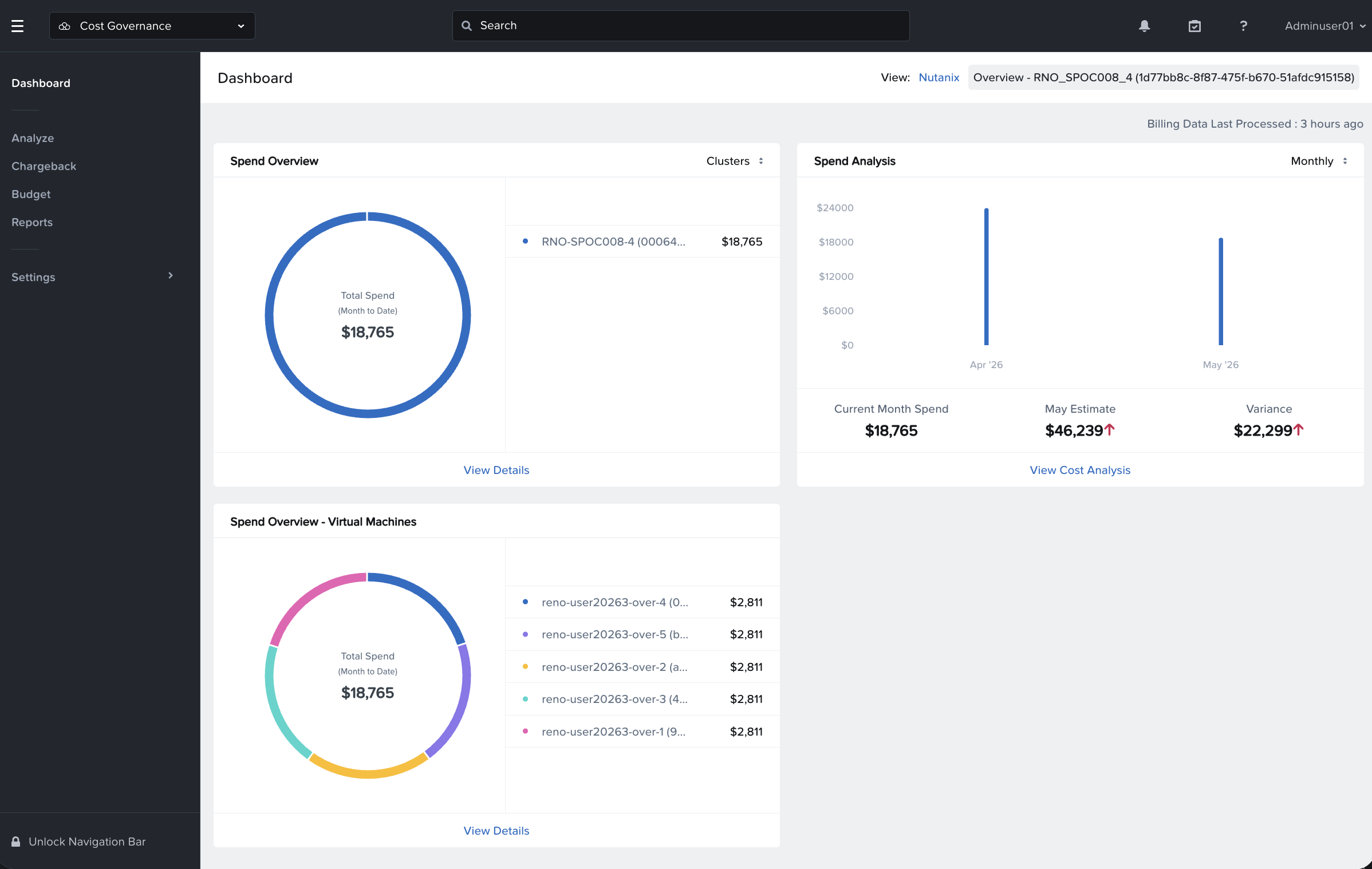
Cost Governance does not replace financial systems of record. Instead, it provides infrastructure-aware cost visibility that can be used by operations, platform, application, and finance teams.
Starting with NCM version 2.0, Cost Governance is deployed on-prem.
At a high level, Cost Governance works by collecting Nutanix infrastructure inventory and usage data, applying a cost model, mapping resources to cost centers, and presenting cost information through dashboards, reports, budgets, and alerts. If you are running ESXi on Nutanix Cloud Infrastructure (NCI), the TCO model does factor in the per-core subscription licensing for ESXi, but the cost governance functionality itself is strictly for the Nutanix platform.Cost Governance on-prem (in NCM 2.0) is limited to Nutanix environments only.
The basic workflow is:
This allows organizations to move from infrastructure-level resource consumption to business-level cost visibility.
Cost centers are logical groupings used to allocate cost to the appropriate owner. A cost center may represent a department, application team, project, environment, or business function.
Examples include:
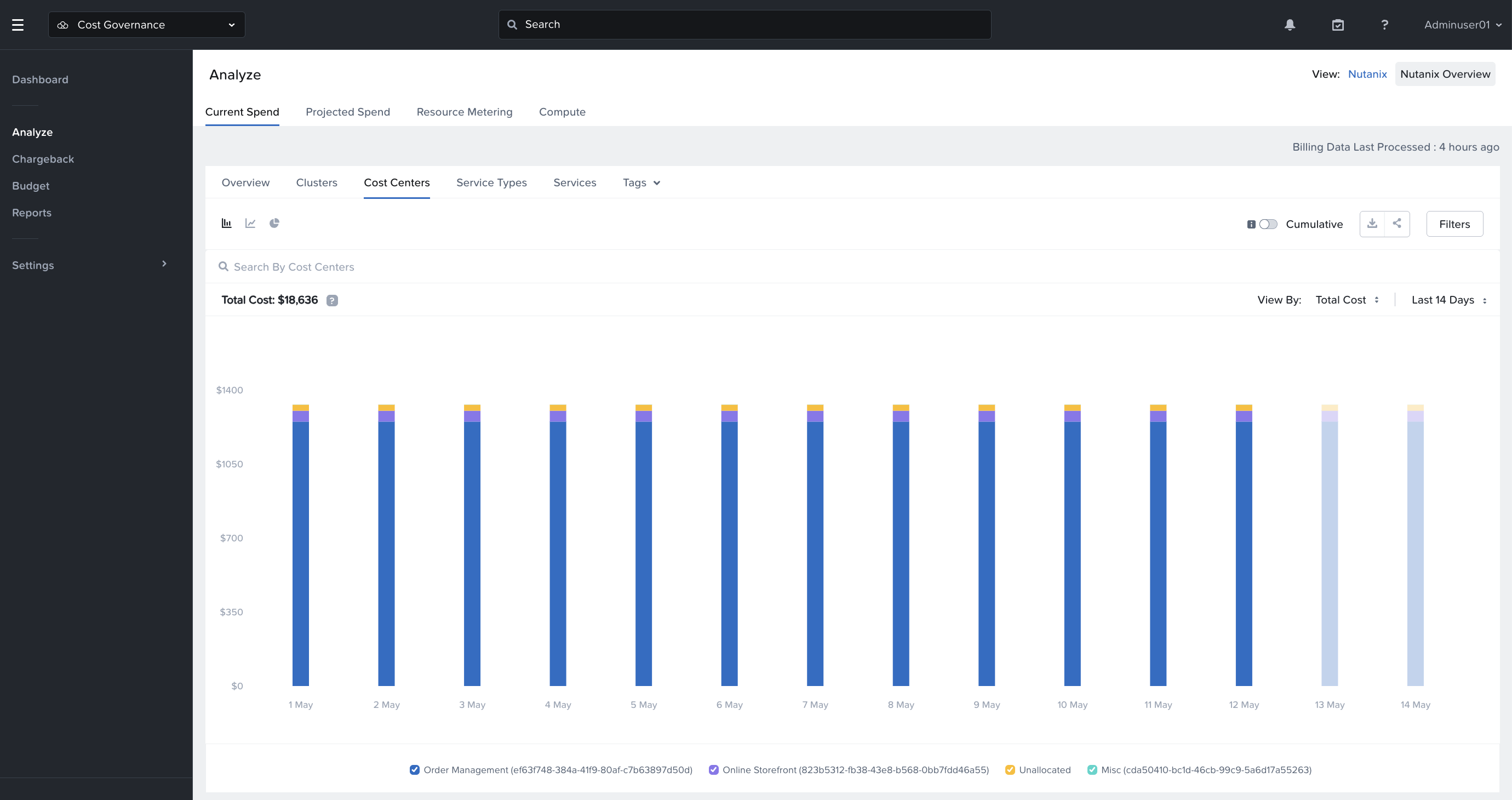
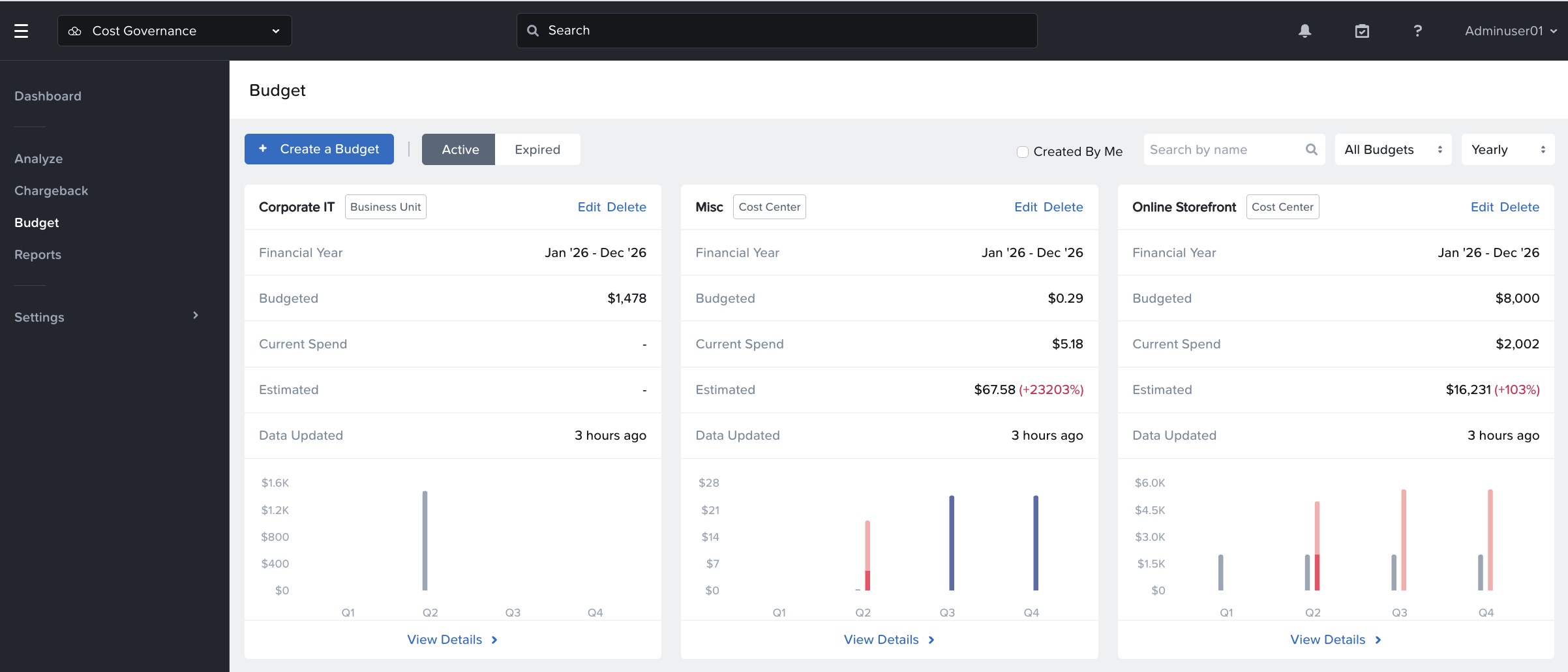
Budgets define expected or approved spend for a cost center. Cost Governance can track actual cost against the configured budget and help identify areas where spending may exceed expectations.
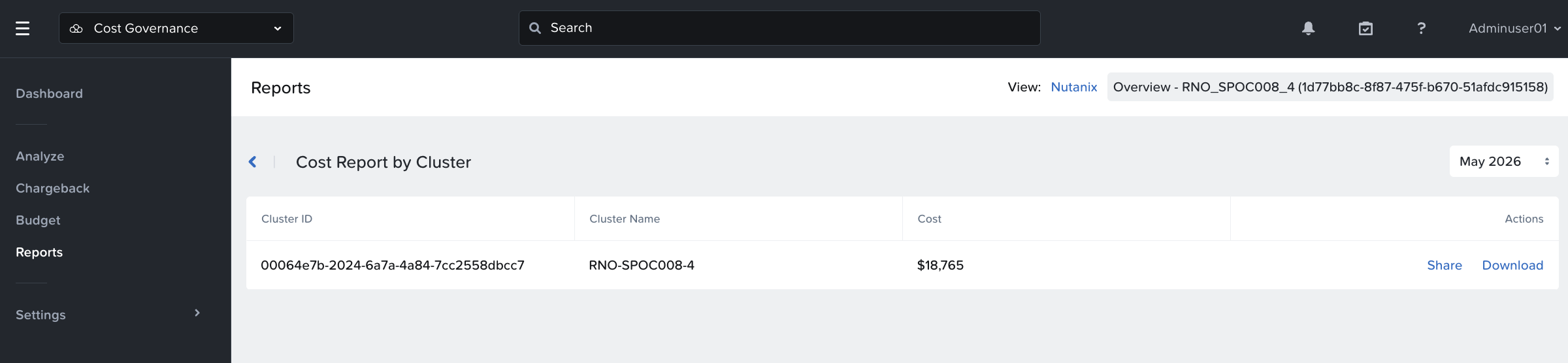
Reports provide a way to share cost data with stakeholders. Reports can support operational reviews, budget discussions, showback workflows, and chargeback processes.
A metering model is the foundation for calculating infrastructure cost in Cost Governance. It defines the cost inputs used to estimate how much it costs to run workloads on Nutanix infrastructure.
Unlike public cloud environments, where costs are typically provided through a usage-based bill, on-prem infrastructure costs must be modeled from the underlying expenses required to operate the environment. These expenses can include hardware, software, support, facilities, power and cooling, personnel, and other operational costs.
Once these inputs are defined, Cost Governance can use resource consumption data to estimate workload cost and allocate that cost to the appropriate cost centers, teams, applications, or projects.
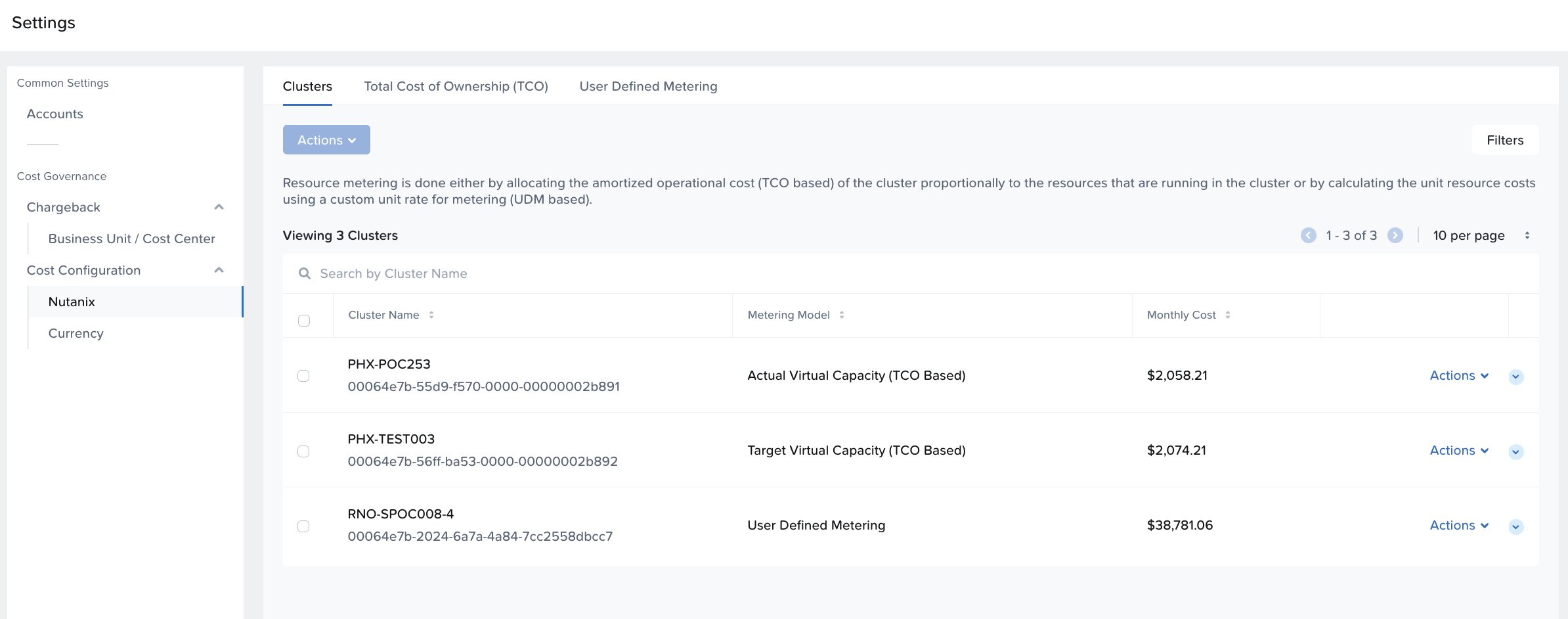
Public cloud environments expose cost through provider bills and usage-based pricing. Nutanix on-prem infrastructure requires a different approach because the organization owns or operates the infrastructure directly.
Cost Governance uses a Total Cost of Ownership model to estimate the cost of running workloads on Nutanix infrastructure.
The TCO model can include infrastructure-related cost factors such as:
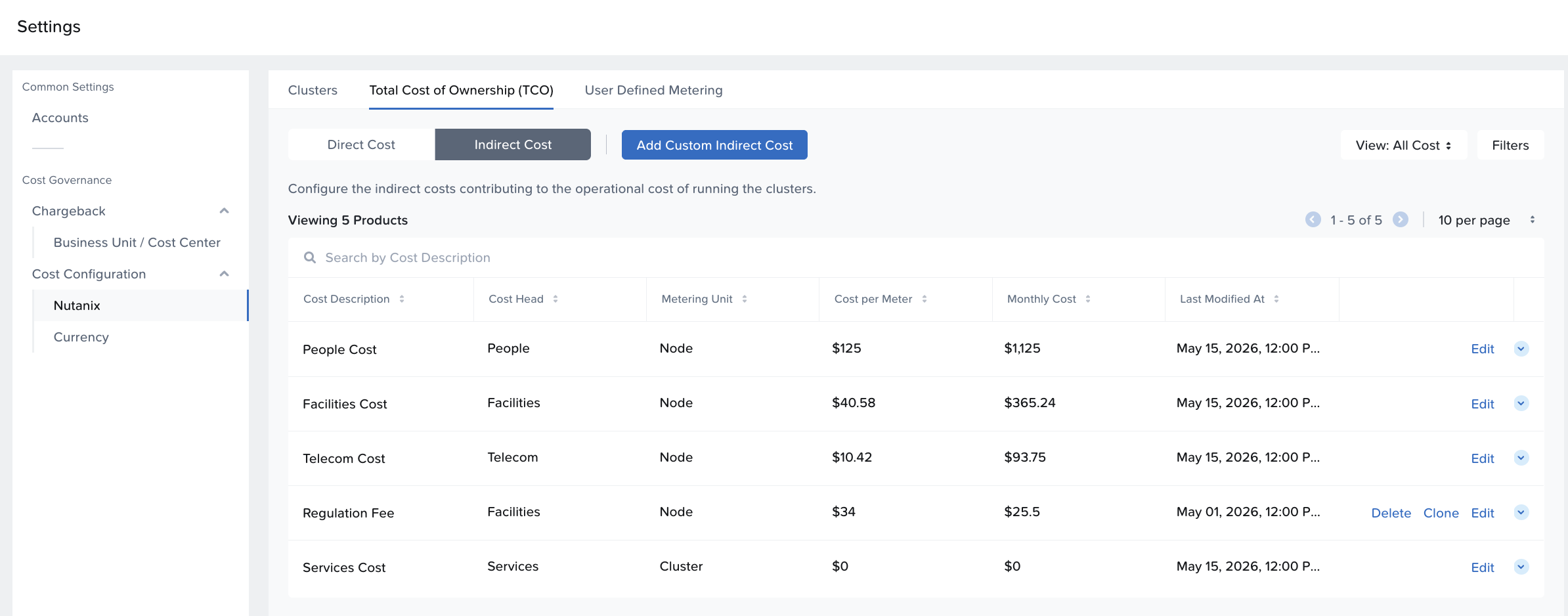
Cost Governance provides a TCO cost model out of the box which can be used as is or modified to enhance the cost metering model. Cost Governance can allocate cost across workloads, cost centers, teams, or applications based on infrastructure consumption.
User Defined Metering provides a flexible way to define custom rates for infrastructure consumption.
While the TCO metering model calculates cost based on the total cost of operating the underlying infrastructure, User Defined Metering allows administrators to define their own unit-based rates for resources such as CPU, memory, and storage.
This is useful for organizations that already have an internal pricing model or want to align infrastructure chargeback with business-specific rates rather than calculated infrastructure cost.
User Defined Metering can help teams create a more predictable and standardized cost model. Instead of calculating cost only from infrastructure ownership and operating expenses, administrators can apply rates that reflect how the organization wants to allocate or recover costs internally.
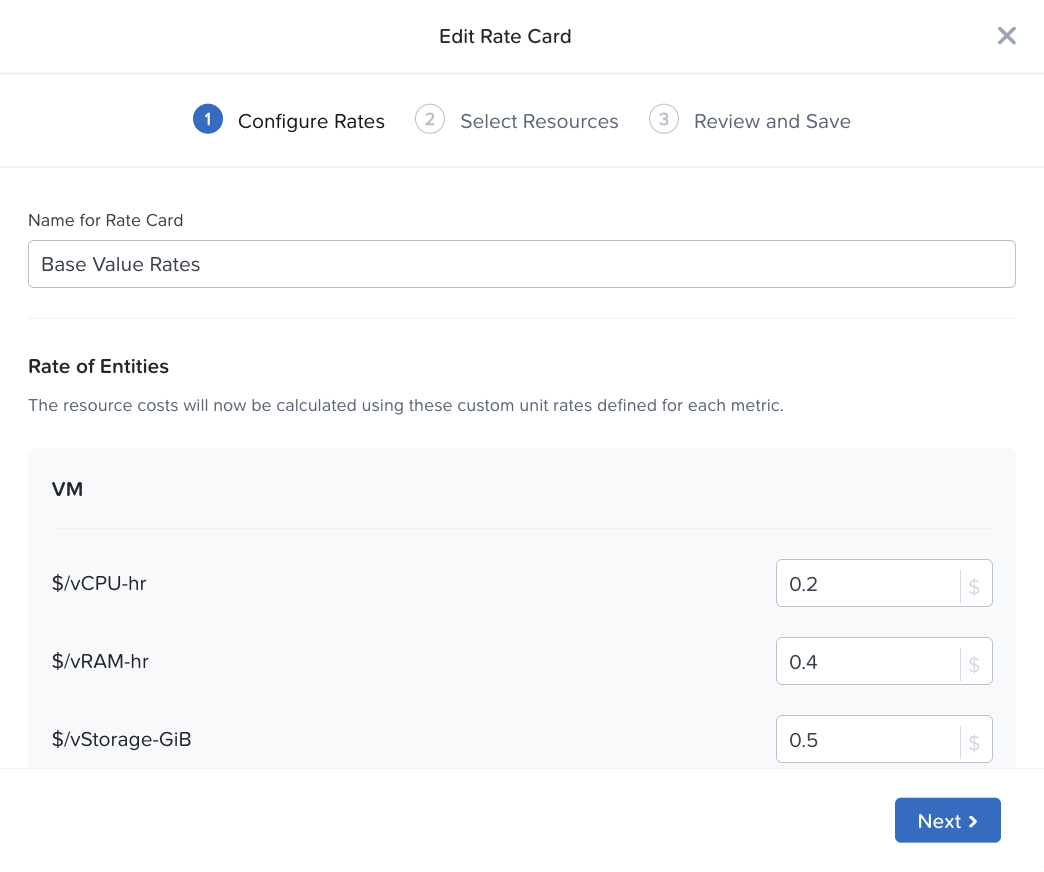
This model is especially helpful when different teams, departments, or cost centers need a consistent way to understand the cost of the resources they consume.
Common use cases include:
By using User Defined Metering, organizations can tailor cost calculations to match their own financial, operational, or organizational requirements.
Cost Governance supports showback and chargeback models for Nutanix infrastructure.
Showback provides visibility into infrastructure cost without directly billing teams. It helps application owners, platform teams, and finance stakeholders understand how much Nutanix infrastructure is being consumed and what that consumption costs.
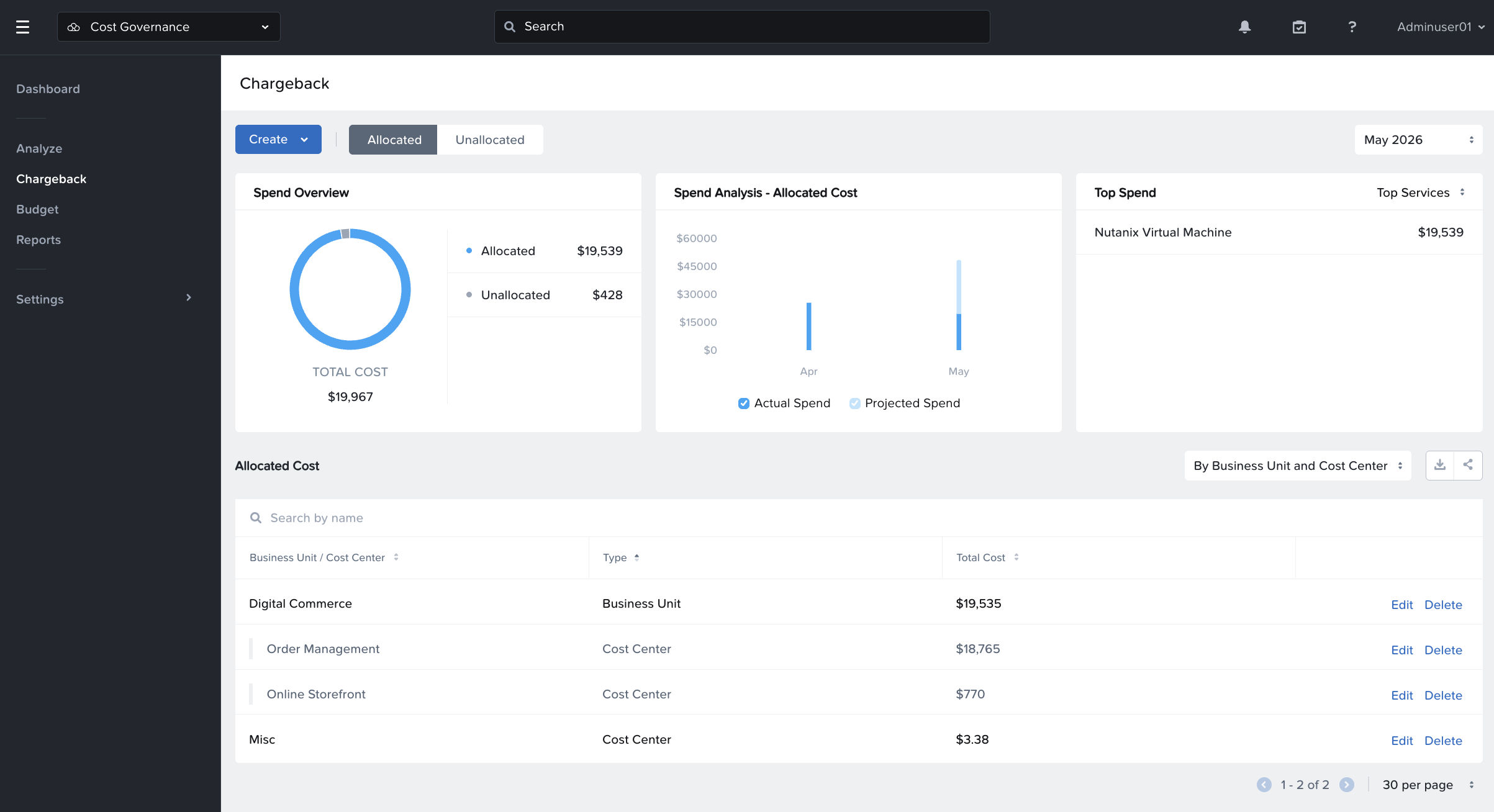
Chargeback goes further by assigning those costs back to the consuming team, department, project, or cost center.
Cost Governance helps organizations identify areas where Nutanix infrastructure may not be used efficiently.
Common optimization opportunities include:
Optimization recommendations should be reviewed with operational context. Some workloads may appear underutilized but still be required for redundancy, peak demand, compliance, or application-specific behavior.
The goal is not simply to reduce cost. The goal is to align Nutanix infrastructure consumption with business value.
©2025 Nutanix, Inc. All rights reserved. Nutanix, the Nutanix logo and all Nutanix product and service names mentioned are registered trademarks or trademarks of Nutanix, Inc. in the United States and other countries. All other brand names mentioned are for identification purposes only and may be the trademarks of their respective holder(s).